


If you’ve ever used a mobile app to book a ride, paid online, or logged into a website using your social media account, you’ve already experienced the power of APIs. But many business owners still ask: what is an API, and why does it matter so much?
An API, or Application Programming Interface, acts as a bridge that allows different software systems to communicate with each other. In today’s digital ecosystem, where businesses rely on multiple tools, platforms, and services, APIs have become the backbone of seamless connectivity.
Understanding what is an API is no longer just a technical concern—it’s a strategic advantage. APIs enable businesses to automate processes, integrate systems, and scale faster than ever before. This article breaks down how APIs work, their real-world applications, and why they are essential for modern businesses.
What Is an API?
At its core, the answer to what is an API is simple: it’s a set of rules that allows one software application to interact with another.
Think of an API like a waiter in a restaurant. You (the user) place an order, the waiter (API) communicates it to the kitchen (server), and then delivers the food (response) back to you. You don’t need to know how the kitchen operates—you just get the result.
In technical terms, APIs define how requests and responses should be structured, enabling systems to exchange data securely and efficiently. Whether it’s retrieving weather data, processing payments, or syncing user information, APIs make it all possible.
How APIs Work
To fully understand what is an API, it’s important to explore how APIs work behind the scenes.
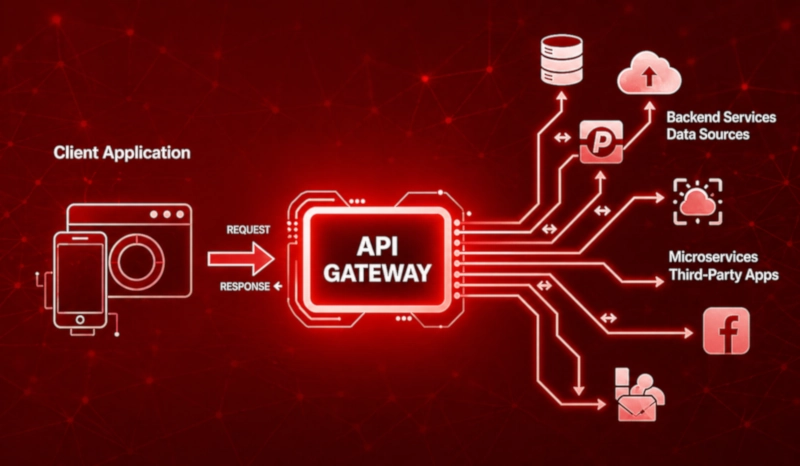
When a user interacts with an application, a request is sent to a server via an API. This request includes specific parameters, such as user input or data queries. The server processes the request and sends back a response, typically in formats like JSON or XML.
This process happens in milliseconds and follows a structured flow:
Request and Response Cycle
When you open a weather app, it sends a request to a weather API asking for current conditions. The API fetches the data from its server and returns it to your app, which then displays it in a user-friendly format.
Endpoints and Protocols
APIs operate through endpoints—specific URLs where requests are sent. Most modern APIs use HTTP or HTTPS protocols, ensuring secure communication between systems.
Authentication and Security
Security is a critical part of how APIs work. APIs often require authentication methods such as API keys or tokens to ensure that only authorized users can access data.
Understanding how APIs work helps businesses realize how efficiently data flows between systems, enabling faster and smarter decision-making.
The Role of APIs in the Modern Internet
The modern internet is not a collection of isolated systems—it’s a network of interconnected services. APIs are the glue that holds this ecosystem together.
Enabling Seamless Integrations
Businesses today rely on multiple tools: CRM systems, payment gateways, marketing platforms, and analytics tools. APIs allow these systems to communicate seamlessly, eliminating manual work and reducing errors.
For example, when a customer makes a purchase on an eCommerce website, APIs can automatically update inventory, process payment, and trigger email notifications—all in real time.
Powering Mobile and Web Applications
Mobile apps depend heavily on APIs to function. Whether it’s fetching user data, displaying maps, or enabling messaging features, APIs handle the heavy lifting behind the scenes.
Without APIs, apps would need to build every feature from scratch, significantly increasing development time and cost.
Supporting Cloud-Based Systems
Cloud computing and APIs go hand in hand. APIs allow cloud services to deliver scalable and flexible solutions, enabling businesses to access resources and data from anywhere.
This is one of the key reasons why APIs are central to digital transformation strategies.
API Integration Benefits for Businesses
Understanding API integration benefits can help businesses unlock new growth opportunities.
Improved Efficiency and Automation
One of the biggest advantages of APIs is automation. Tasks that once required manual input can now be handled automatically through integrations.
For instance, syncing customer data between platforms or generating invoices can be done instantly using APIs, saving time and reducing operational costs.
Enhanced User Experience
APIs allow businesses to deliver richer and more personalized experiences. Features like single sign-on (SSO), real-time updates, and personalized recommendations are all powered by APIs.
This leads to higher customer satisfaction and improved retention rates.
Scalability and Flexibility
As businesses grow, their systems need to scale. APIs make it easy to add new features or integrate new tools without disrupting existing operations.
This flexibility is essential for businesses looking to stay competitive in fast-changing markets.
Faster Development Cycles
Developers can use existing APIs to build applications more quickly, rather than creating everything from scratch. This accelerates product development and reduces time-to-market.
Real-World Examples of APIs
To better understand what is an API, let’s look at some practical examples.
Payment Gateways
When you make an online payment, APIs connect your website to payment processors. These APIs handle transactions securely, verify details, and confirm payments in seconds.
Social Media Integration
Logging into a website using your social media account is another example of APIs in action. The website uses a social media API to authenticate your identity and retrieve basic profile information.
Travel and Booking Platforms
Travel websites aggregate data from airlines, hotels, and rental services using APIs. This allows users to compare options and book services from a single platform.
Maps and Location Services
Many apps use map APIs to display locations, calculate routes, and provide navigation. These APIs deliver real-time data, enhancing usability and convenience.
These examples highlight how APIs are deeply embedded in everyday digital experiences.
Types of APIs
While understanding what is an API, it’s also helpful to know the different types:
Open APIs (Public APIs)
These are available to developers and allow third-party applications to access data or services. They are widely used for integrations and innovation.
Internal APIs
Used within organizations, internal APIs help different systems communicate securely and efficiently.
Partner APIs
These are shared with specific business partners to enable collaboration and data exchange.
Composite APIs
These combine multiple APIs into a single request, improving performance and reducing complexity.
Each type serves a specific purpose, depending on business needs and use cases.
Challenges and Considerations
While APIs offer significant advantages, businesses must also address certain challenges.
Security is a major concern, as APIs can be vulnerable to attacks if not properly protected. Implementing strong authentication and encryption is essential.
Performance is another factor. Poorly designed APIs can slow down applications and affect user experience.
Additionally, managing multiple APIs can become complex, requiring proper documentation and governance.
Despite these challenges, the benefits of APIs far outweigh the risks when implemented correctly.
The Future of APIs
As technology continues to evolve, APIs will play an even greater role in shaping the digital landscape.
Emerging trends like microservices architecture, artificial intelligence, and the Internet of Things (IoT) are all heavily reliant on APIs. Businesses that embrace API-driven strategies will be better positioned to innovate and adapt.
The growing importance of APIs also means that understanding what is an API is becoming a fundamental skill for both technical and non-technical professionals.
FAQ: What Is an API?
What is an API in simple terms?
An API is a tool that allows different software applications to communicate and share data with each other.
Why are APIs important for businesses?
APIs improve efficiency, enable automation, and allow businesses to integrate multiple systems seamlessly.
How APIs work in real life?
APIs connect applications to services like payment systems, social media platforms, and cloud services, enabling real-time data exchange.
Are APIs secure?
Yes, when implemented with proper authentication, encryption, and security protocols, APIs can be highly secure.
Conclusion
So, what is an API, and why is it so important? APIs are the invisible engines powering the modern internet. They enable systems to connect, share data, and automate processes, making digital experiences faster, smarter, and more efficient.
From simplifying operations to enabling innovation, the API integration benefits for businesses are undeniable. As companies continue to adopt digital solutions, APIs will remain at the core of scalable and interconnected systems.
For any business looking to grow in today’s competitive landscape, understanding how APIs work is not optional—it’s essential.
