


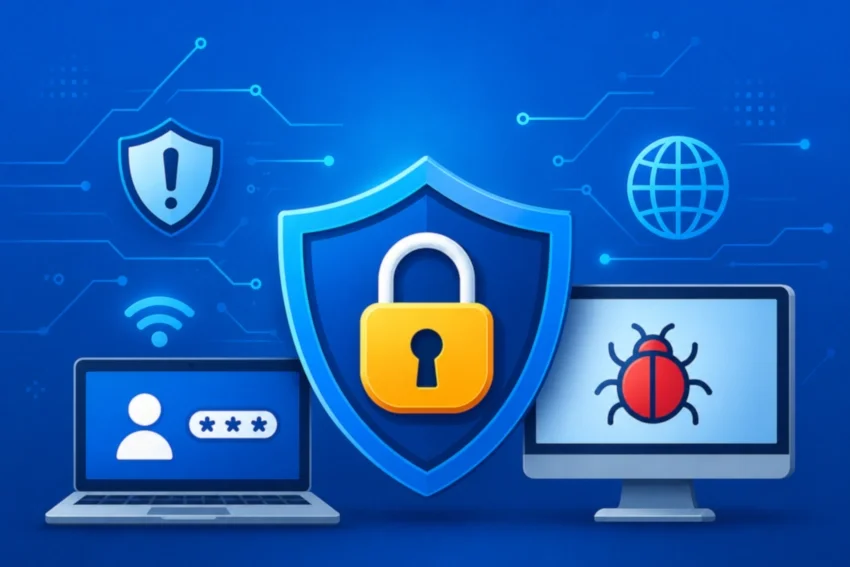
Cybersecurity has become one of the most important priorities for modern businesses. As organizations increasingly rely on digital technologies, cloud services, and online communication, cyber threats continue to grow in both frequency and sophistication. Regardless of size or industry, every company faces potential security risks that could disrupt operations, damage reputation, and result in financial losses.
Many business owners assume cybercriminals only target large corporations. However, small and medium-sized businesses are often attractive targets because they may have fewer security measures in place. As a result, understanding cybersecurity for businesses is essential for protecting sensitive information and ensuring long-term success.
A strong cybersecurity strategy not only safeguards business assets but also helps build customer trust and maintain operational stability.
What Is Cybersecurity for Businesses?
Cybersecurity for businesses refers to the practices, technologies, and policies used to protect company systems, networks, applications, and data from cyber threats.
These threats can come from various sources, including hackers, malicious software, phishing attacks, insider threats, and data breaches.
The primary goal of business cybersecurity is to prevent unauthorized access, protect confidential information, and ensure business continuity.
As organizations continue to adopt digital solutions, cybersecurity becomes increasingly important for managing risk and maintaining competitiveness.
Why Cybersecurity Matters More Than Ever
Technology has transformed how businesses operate. Cloud computing, remote work, digital payments, and online collaboration have created significant opportunities for growth and efficiency.
However, these advancements have also expanded the number of potential security vulnerabilities.
Cyberattacks can result in:
- Financial losses
- Operational disruptions
- Data theft
- Legal consequences
- Reputation damage
- Loss of customer trust
Therefore, cybersecurity should be viewed as a business necessity rather than a technical issue.
Companies that prioritize security are often better prepared to manage risks and respond effectively to emerging threats.
 Common Cybersecurity Threats Facing Businesses
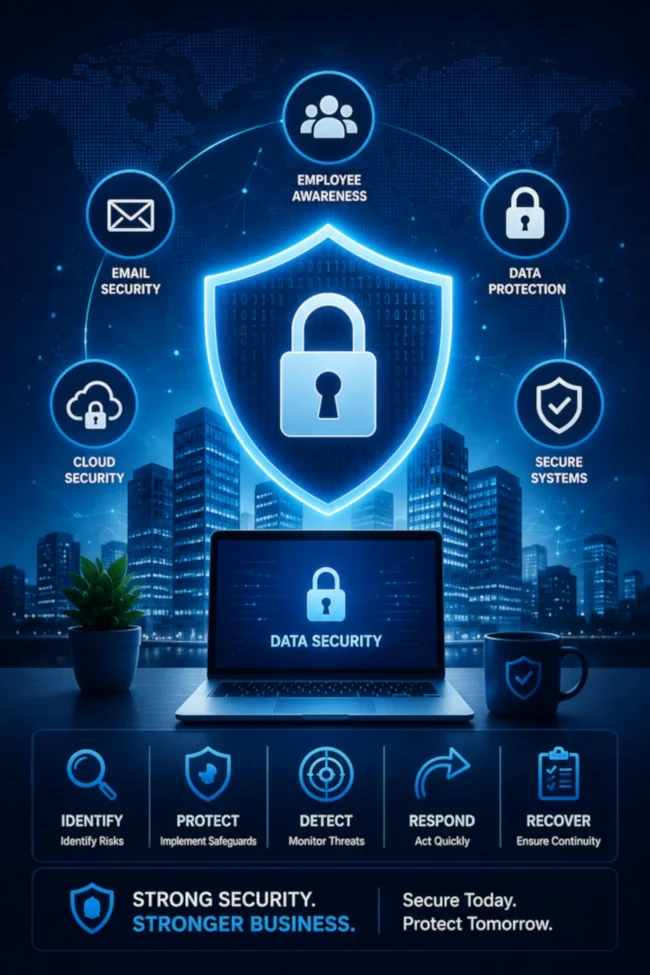 Common Cybersecurity Threats Facing Businesses
Understanding common threats is the first step toward building a stronger security strategy.
Phishing Attacks
Phishing remains one of the most common cyber threats. Attackers use deceptive emails, messages, or websites to trick individuals into revealing sensitive information such as passwords or financial details.
Even a single successful phishing attempt can compromise business systems and customer data.
Malware
Malware refers to malicious software designed to damage systems, steal information, or disrupt operations.
Examples include viruses, spyware, trojans, and ransomware.
Businesses without proper security controls may unknowingly install malware through infected downloads or compromised websites.
Ransomware
Ransomware attacks encrypt company data and demand payment in exchange for restoration.
These attacks can significantly impact operations and often result in substantial financial losses.
Consequently, ransomware has become one of the most serious cybersecurity threats facing businesses today.
Insider Threats
Not all security risks originate from external attackers.
Employees, contractors, or former staff members may intentionally or accidentally expose sensitive information. Poor access controls and inadequate training often contribute to insider-related incidents.
Weak Password Security
Weak or reused passwords remain a major cybersecurity vulnerability.
Cybercriminals frequently exploit poor password practices to gain unauthorized access to systems and accounts.
Implementing strong password policies can significantly reduce this risk.
Building a Strong Cybersecurity Strategy
An effective cybersecurity strategy requires a combination of technology, processes, and employee awareness.
Businesses should take a proactive approach rather than waiting for an incident to occur.
Conduct Regular Risk Assessments
Risk assessments help identify vulnerabilities and prioritize security improvements.
Organizations should regularly evaluate systems, applications, and workflows to determine potential security risks.
Understanding where weaknesses exist allows businesses to allocate resources more effectively.
Implement Access Controls
Not every employee needs access to all company information.
Role-based access controls help limit exposure by ensuring individuals only access the data necessary for their responsibilities.
This approach reduces the potential impact of both external and internal threats.
Keep Software Updated
Outdated software often contains security vulnerabilities that cybercriminals can exploit.
Regular updates and security patches help protect systems from known threats.
Businesses should establish processes for maintaining software, operating systems, and security tools.
The Role of Employee Awareness
Technology alone cannot provide complete protection.
Employees are often the first line of defense against cyber threats. Therefore, cybersecurity awareness training is an important component of any security program.
Training should cover:
- Phishing awareness
- Password security
- Safe internet usage
- Data handling procedures
- Reporting suspicious activity
When employees understand cybersecurity risks, businesses become significantly more resilient.
Protecting Business Data
Data is one of the most valuable assets within any organization.
Businesses collect and store information related to customers, employees, finances, and operations. Protecting this data is essential for maintaining trust and compliance.
Organizations should implement:
- Data encryption
- Secure backups
- Access restrictions
- Data retention policies
- Cloud security controls
These measures help reduce the likelihood of unauthorized access and data loss.
Cybersecurity and Remote Work
Remote work has introduced new security challenges for businesses.
Employees often access company systems from various locations and devices, increasing the potential attack surface.
To improve remote work security, businesses should:
- Use virtual private networks (VPNs)
- Require multi-factor authentication
- Secure home networks
- Establish remote access policies
- Monitor user activity
These practices help maintain security while supporting workforce flexibility.
Benefits of Strong Business Cybersecurity
Investing in cybersecurity provides benefits beyond risk reduction.
Organizations with strong cybersecurity programs often experience:
- Increased customer confidence
- Better regulatory compliance
- Reduced downtime
- Improved operational resilience
- Enhanced reputation
- Stronger competitive positioning
Cybersecurity can therefore contribute directly to long-term business success.
Future Trends in Business Cybersecurity
Cyber threats continue to evolve alongside technological advancements.
Artificial intelligence, cloud computing, and connected devices are creating new opportunities and new risks. Businesses must remain proactive and adaptable as the cybersecurity landscape changes.
Future cybersecurity strategies will likely focus on:
- AI-powered threat detection
- Zero-trust security models
- Advanced endpoint protection
- Automated security monitoring
- Improved cloud security practices
Organizations that stay informed and invest in modern security solutions will be better prepared for emerging challenges.
Conclusion
Cybersecurity for businesses is no longer optional. It is a fundamental requirement for protecting data, maintaining customer trust, and ensuring operational continuity.
By understanding common threats, implementing security best practices, and promoting employee awareness, businesses can significantly reduce their exposure to cyber risks.
As technology continues to evolve, organizations that prioritize cybersecurity will be better positioned to support growth, innovation, and long-term success in an increasingly digital world.
FAQ
Why is cybersecurity important for businesses?
Cybersecurity protects business systems, customer data, and financial information while reducing the risk of cyberattacks and operational disruptions.
What is the biggest cybersecurity threat for businesses?
Phishing attacks remain one of the most common and effective threats because they target employees through deceptive communications.
How can small businesses improve cybersecurity?
Small businesses can improve cybersecurity by implementing strong passwords, employee training, software updates, secure backups, and access controls.
What is business cybersecurity?
Business cybersecurity refers to the strategies, technologies, and policies used to protect company systems, networks, and data from cyber threats.
