



Technology has become one of the most powerful drivers of business success in the modern world. From small startups to global enterprises, organizations increasingly rely on digital tools and innovative solutions to improve efficiency, serve customers, and expand their operations.
While traditional growth strategies such as sales, marketing, and customer service remain important, technology now plays a critical role in supporting sustainable business growth. Businesses that embrace technological advancements often gain a competitive advantage by improving productivity, reducing costs, and adapting more quickly to changing market conditions.
As industries continue to evolve, understanding how technology supports business growth has become essential for organizations seeking long-term success.
Why Technology Matters for Modern Businesses
Business environments are becoming increasingly complex. Customer expectations are rising, competition is intensifying, and market trends are changing faster than ever before. In response, businesses must find ways to operate more efficiently while delivering exceptional customer experiences. Technology provides solutions that help organizations achieve these goals.
Whether through automation, cloud computing, artificial intelligence, or data analytics, technology allows businesses to make smarter decisions and improve overall performance. As a result, companies that invest in technology are often better positioned for long-term growth.
Improving Operational Efficiency
One of the most significant ways technology supports business growth is by improving operational efficiency. Many organizations spend valuable time on repetitive administrative tasks such as data entry, scheduling, reporting, and communication. These activities can slow productivity and increase operational costs. Technology helps streamline these processes through automation and digital workflows. For example, businesses can automate invoicing, customer communications, inventory management, and appointment scheduling. Consequently, employees can focus on higher-value activities that contribute directly to growth and innovation.
Enhancing Customer Experiences
Customer experience has become a major factor in business success. Modern customers expect fast responses, personalized interactions, and seamless digital experiences. Businesses that fail to meet these expectations may struggle to retain customers and compete effectively.
Technology enables organizations to improve customer experiences through customer relationship management systems, live chat tools, automated support services, and personalized marketing platforms.
Additionally, businesses can use customer data to better understand preferences and deliver more relevant products and services. As a result, stronger customer relationships often lead to higher retention rates and increased revenue.
Supporting Better Decision-Making
Every business generates large amounts of information. However, collecting data alone is not enough. Technology allows organizations to transform raw data into actionable insights. Data analytics platforms can identify trends, measure performance, and uncover opportunities for improvement.
For example, businesses can analyze customer behavior, monitor sales performance, and evaluate marketing effectiveness. Therefore, leaders can make informed decisions based on evidence rather than assumptions. Better decision-making often leads to more effective growth strategies and reduced business risks.
 Enabling Business Automation
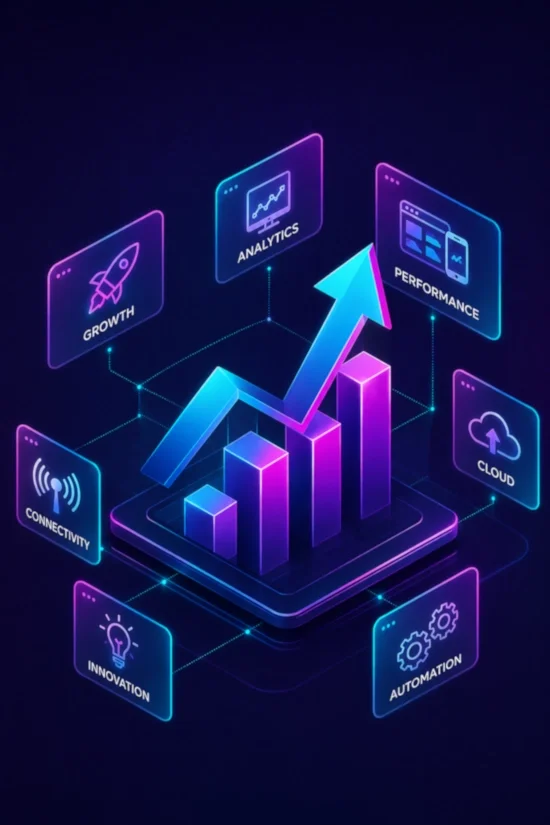 Enabling Business Automation
Business automation has become one of the most valuable applications of technology. Automation tools can handle repetitive tasks without requiring constant human involvement. This improves efficiency while reducing the likelihood of errors.
For example, businesses can automate email marketing campaigns, customer follow-ups, payroll processing, and workflow management. Moreover, automation allows organizations to scale operations without significantly increasing labor costs. As businesses grow, automation becomes increasingly important for maintaining efficiency and consistency.
Facilitating Remote and Flexible Work
The workplace has changed significantly in recent years. Many organizations now support remote work and flexible working arrangements. Technology has made this transition possible through cloud-based collaboration tools, video conferencing platforms, and project management software. These solutions allow employees to communicate, collaborate, and access information from virtually anywhere. As a result, businesses can attract talent from broader geographic areas while improving workforce flexibility and productivity.
Driving Innovation
Innovation is often a key factor in long-term business growth. Technology enables organizations to develop new products, improve existing services, and identify emerging opportunities. Businesses that embrace innovation are more likely to stay competitive and adapt to changing market conditions.
For example, artificial intelligence, machine learning, and advanced analytics are helping businesses create more personalized customer experiences and improve operational performance. Furthermore, technology encourages experimentation and continuous improvement, both of which are essential for growth.
Improving Scalability
As businesses grow, managing larger workloads becomes increasingly challenging. Technology helps organizations scale more effectively by creating systems that can handle increased demand without requiring proportional increases in resources.
Cloud computing, automation platforms, and digital infrastructure allow businesses to expand operations while maintaining efficiency. Consequently, companies can support growth without experiencing major operational disruptions. Scalability is one of the most important advantages technology provides for growing organizations.
Strengthening Competitive Advantage
Technology often determines how effectively businesses compete in their industries. Organizations that adopt modern solutions can respond more quickly to customer needs, improve service quality, and optimize internal processes.
Meanwhile, businesses that resist technological change may struggle to keep pace with competitors. Investing in technology is no longer simply an option. For many businesses, it has become a necessity for maintaining relevance and competitiveness.
Common Challenges When Adopting Technology
Although technology offers many benefits, implementation can present challenges. Some businesses struggle with budget limitations, employee resistance, or integration issues. Others invest in technology without clear objectives, resulting in poor outcomes.
To maximize success, organizations should align technology investments with business goals and provide appropriate training for employees. Additionally, businesses should focus on solutions that address specific operational needs rather than adopting technology solely because it is popular.
The Future of Technology and Business Growth
Technology continues to evolve at a rapid pace. Artificial intelligence, cloud computing, automation, cybersecurity solutions, and advanced analytics are expected to play even larger roles in business operations over the coming years.
Organizations that remain adaptable and open to innovation will be better prepared to capitalize on future opportunities. As digital transformation accelerates, technology will continue to be a driving force behind business success and sustainable growth.
Conclusion
Technology supports business growth in numerous ways, from improving operational efficiency and customer experiences to enabling automation and data-driven decision-making. Businesses that embrace technology are often more productive, scalable, and competitive than those relying solely on traditional methods. Furthermore, technology creates opportunities for innovation, flexibility, and long-term success.
As markets continue to evolve, organizations that strategically invest in technology will be better positioned to achieve sustainable growth and maintain a strong competitive advantage.
FAQ
How does technology support business growth?
Technology supports business growth by improving efficiency, automating processes, enhancing customer experiences, and enabling better decision-making.
Why is automation important for business growth?
Automation reduces manual work, increases productivity, improves accuracy, and allows businesses to scale operations more efficiently.
How does technology improve customer experience?
Technology enables faster communication, personalized interactions, and improved customer support through digital tools and platforms.
What technologies help businesses grow?
Cloud computing, automation software, data analytics, artificial intelligence, customer relationship management systems, and cybersecurity solutions all contribute to business growth.
